
The Car Seat Questions I Hear Most as a CPST
The real-life car seat questions parents ask me most (and what to know before you buckle in).

By
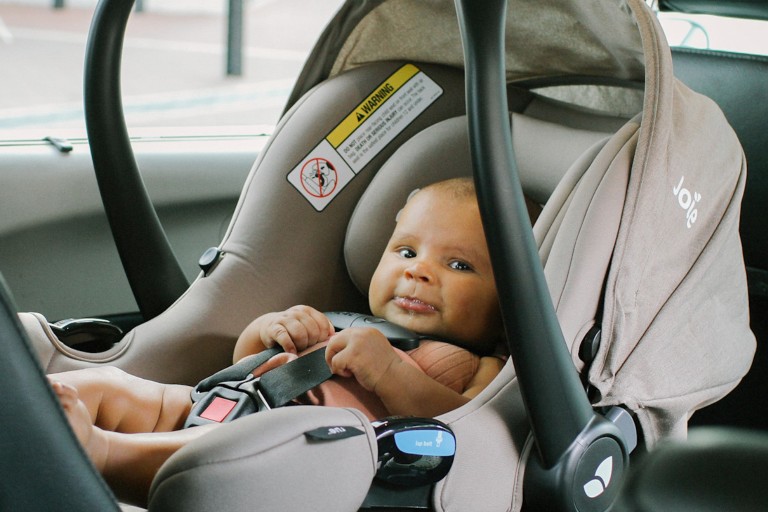
I've been Babylist's gear editor and a certified Child Passenger Safety Technician for years (a CPST, which means I’m trained in car seat safety and how to properly install and use car seats), and if there's one thing I've learned from testing car seats, teaching at our LA Showroom and fielding questions from parents everywhere, it's this: everyone has car seat questions. A lot of them.
That's completely normal. Start looking into car seats and you're quickly down a rabbit hole of rear-facing limits, LATCH anchors, expiration dates and installation methods. It adds up fast. But car seats are also something you'll use every day for years—often through elementary school— so it's worth getting comfortable with the basics early on. And most of it comes down to the same handful of questions, with answers that are more reassuring than you'd expect.
Here are the ones I hear most often, and the answers worth knowing before you start buckling in your newest addition.
What is the safest car seat?
This is the question I get asked the most as a CPST and as Babylist’s gear editor. And the good news is the answer is pretty reassuring.
All car seats sold in the US must meet the same federal safety standards. While manufacturers aren’t required to publicly share their internal crash test data, they are required to comply with these standards, so any car seat you buy has passed the required testing.
So what makes one car seat the safest choice for your family? It comes down to three things:
It fits your child. The seat needs to fit your child’s age, height, weight and developmental level.
It fits your vehicle. The car seat can be correctly installed in your vehicle.
You can use it correctly every time. You and anyone who drives your child need to be familiar with the car seat and its features and be comfortable using it correctly on every ride.
What’s the difference between an infant car seat and a convertible car seat?
Car seat terminology is a lot to take in. Understanding the differences between an infant car seat and a convertible seat is a good place to start.
An infant car seat, sometimes called a bucket seat, is a seat made specifically for infants and young children. Infant car seats are rear-facing and portable, and many are compatible with strollers. Most consist of a carrier and a detachable base. Some infant car seats have rotating features.
A convertible car seat is designed to grow with your child. It can be used rear-facing for infants then turned forward-facing for older kids. Convertible seats are larger and heavier and stay installed in your vehicle rather than clicking in and out like an infant seat. Some models also offer rotating features.
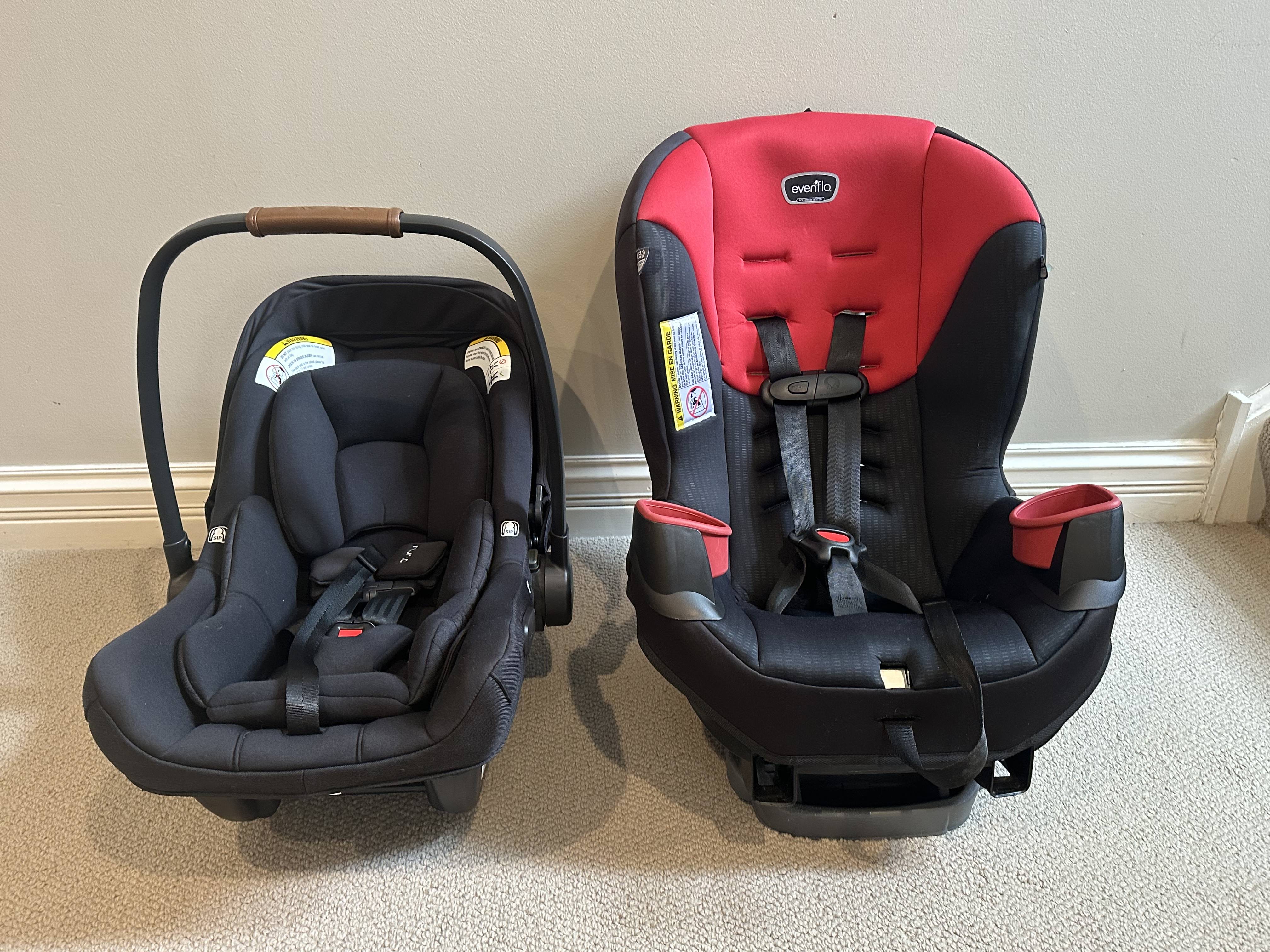
The Pipa aire rx Infant Car Seat versus the Evenflo Sonus 65 Convertible Car Seat. (Photo: Jen LaBracio, Babylist Senior Gear Editor)
Can I use a convertible car seat from birth (or do I need an infant car seat)?
Yes, you can use a convertible car seat from birth, but whether you should depends on your lifestyle and what will make things easier for you.
From a safety standpoint, both infant car seats and convertible car seats can be used from birth as long as your baby fits properly within the seat’s height and weight requirements. That said, most convertible seats don’t fit newborns well, especially smaller babies. Infant car seats tend to offer a much more consistent, snug fit for newborns across the board.
The bigger difference for most families comes down to convenience. Infant car seats are designed for portability. You can click them in and out of a base, carry your baby inside without unbuckling them and use them with compatible strollers as part of a travel system. That’s especially helpful in the early months when you’re dealing with frequent doctor visits, short errands and a lot of sleeping on the go.
Convertible car seats stay installed in your vehicle. That means you’ll need to take your baby in and out of the seat every time—and if they fall asleep in the car, there’s no easy way to transfer them without waking them up. It also means you’ll likely rely more on babywearing or moving your baby directly into a stroller.
Bottom line: skipping the infant seat is doable, and some families prefer it. But most parents—including about 80% of Babylist families—register for an infant car seat.
Can I use an infant car seat without a base?
Many infant car seats click in and out of a base that stays installed in your car. What many parents don’t realize is that you’re not limited to using the base; all infant seats sold in the US can also be installed without a base, using your vehicle’s seatbelt.
A baseless installation is a great option for travel, rideshares or even switching cars, as you can leave the heavy, bulky base behind. Just be sure to practice first before trying this for the first time on the go, as there is a bit of a learning curve.
There are now also several baseless car seats on the market, like the Joie Mint Latch, the Nuna PIPA urbn and the Graco GoMax. These seats skip the base altogether and instead use connectors built right into the seat itself (called rigid LATCH connectors). Just flip out the connectors, click them into your vehicle’s lower anchors and you’re set.
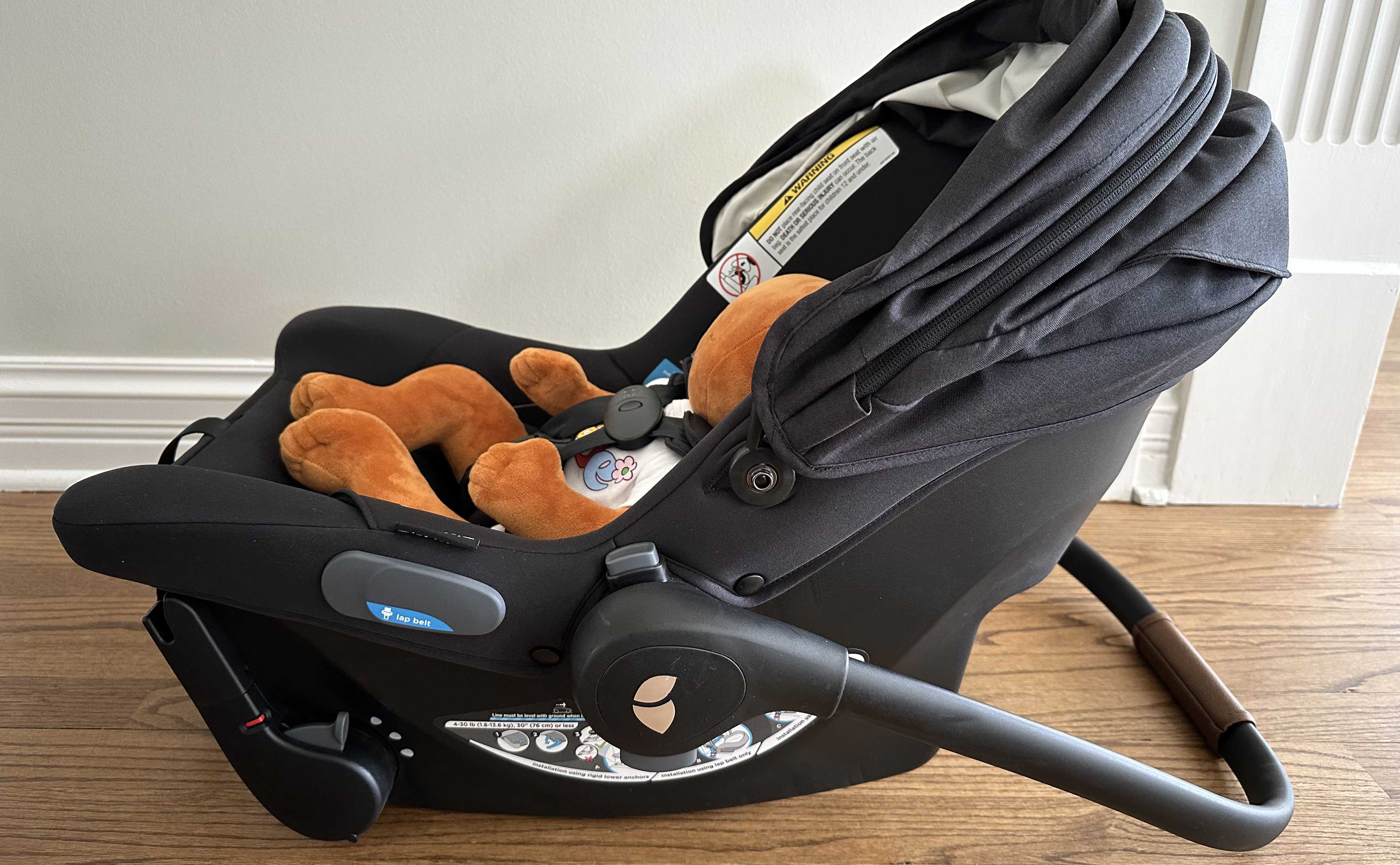
Side view of the Joie Mint Latch Baseless Infant Car Seat. (Photo: Jen LaBracio, Babylist Senior Gear Editor)
How long can a baby stay in an infant car seat, and when do they outgrow it?
Infant car seats can be used from day one until your baby reaches the seat’s maximum height or weight limit, typically around 30–32 inches or 30 pounds, depending on the model. The “or” is the important word to remember. If your baby meets the seat's weight requirement but is over the height requirement, it’s time to make the switch to a convertible, and vice versa.
There’s also the “one-inch rule” to consider. Most infant seats require at least one inch of room between the top of your child’s head and the top of the car seat. (An easy way to check this is to use a board book that is one inch thick and place it on top of your child's head while they are properly secured in the seat.) Because some babies carry height in their torso, a baby with a longer torso may outgrow an infant seat by height before reaching the stated height or weight limits—and once that one-inch rule is met, it’s no longer safe to use the seat.
Remember: your car seat manual is your source of truth for all things rules and regulations. Read it!
What is LATCH and how does it work for car seats?
LATCH stands for Lower Anchors and Tethers for Children. It’s a system designed to help you install your car seat securely in your vehicle without using the seatbelt. Instead, LATCH uses built-in anchors in your car that connect directly to your car seat.
Here’s how it works:
Lower anchors: These are small metal bars hidden in the crack (or “bight”) where your vehicle seat back meets the seat cushion. Your car seat has connectors that clip onto these anchors.
Tether anchor: This is a separate anchor point located behind the vehicle seat (often on the back of the seat, the rear shelf or the floor). It connects to a strap on your car seat called the top tether. (This is used for all forward-facing seats and for some rotating seats in both rear- and forward-facing modes.)
Most vehicles made after 2002 have LATCH in at least two seating positions, typically the two outer seats in the back. Some vehicles also have LATCH in the middle seat, but not always, so it’s important to check your vehicle manual.
A few important things to know:
LATCH is meant to make installation easier, but it’s not safer than a seat belt. A correct installation is what matters most.
You’ll either use LATCH or the seat belt to install your car seat (not both, unless your manual specifically allows it).
There are child weight limits for using LATCH, which you can find in your car seat manual. You’ll need to switch to a seatbelt installation once those limits are met.
How do I install a car seat, and is LATCH or the seat belt safer?
There are two ways to install a car seat: using LATCH or your vehicle’s seatbelt. Both are equally safe. The most important thing isn’t the method you choose—it’s getting a secure, correct install every time.
No matter which method you use, your car seat should:
Move less than one inch side-to-side and front-to-back when tested at the belt path
Be installed at the correct recline angle
Be tightly secured according to the manual
When can a baby face forward in a car seat and when should you switch?
This is one of the most important car seat decisions you’ll make, and one where the guidance is very clear.
Research consistently shows that rear-facing is the safest way for babies and young children to ride. That’s why organizations like the American Academy of Pediatrics (AAP) and the National Highway Traffic Safety Administration (NHTSA) recommend keeping your child rear-facing for as long as possible. At a minimum, kids should ride rear-facing until at least age two. But most children can—and should—stay rear-facing well beyond that.
The best rule of thumb: keep your child rear-facing until they reach the maximum rear-facing height or weight limits of their car seat. Every seat is different, so check your manual, but many convertible seats today allow rear-facing up to 40 or even 50 pounds, which gets a lot of kids well into the toddler years. If extended rear-facing is important to you, prioritize a seat with higher rear-facing limits to give you more time in that position.
The bigger takeaway? Don’t rush it. Moving to the next car seat stage too soon is a common mistake. When it comes to car seats, slower transitions are safer.
Can you use a convertible car seat with a stroller?
I hear this question again and again, both from parents IRL and in online parenting groups. Unfortunately, the answer is no.
Convertible car seats aren’t compatible with strollers. They’re larger, heavier and designed to stay installed in your vehicle rather than click in and out like an infant car seat. Because of that, they don’t attach to strollers for on-the-go use.
Once your little one has made the infant-to-convertible switch, consider a lightweight, travel-friendly car seat like the Cosco Scenera Extend or the Graco Contender Slim. These are much lighter than typical convertibles (around 10–15 pounds instead of 20–25+), making them easier to carry when needed.
Do car seats expire?
Yes, all car seats expire. This includes all types of seats: infant car seats (and their bases), convertible seats, all-in-ones and boosters.
There are a few reasons for this:
Materials can break down over time
Safety standards and technology continue to evolve
Wear and tear from everyday use can affect performance
Expiration dates vary by manufacturer and model, but most seats last about six to 10 years. In general, manufacturers set a seat’s expiration date to align with how long the seat is designed to be used. You can usually find the expiration date printed on a sticker on the bottom or side of a seat.
What should I do with an expired car seat?
The most important thing to remember when disposing of a car seat is to make it unusable. This means:
Cutting the straps
Removing any soft goods or fabrics
Writing “expired do not use” somewhere on the shell of the seat
Target’s Car Seat Trade-In is a great option to dispose of an old or unused seat. Drop your old car seat (in any condition) in the designated box at your nearby Target store, scan the barcode on the box and receive 20% off a new car seat, stroller or home gear purchase. You’ll be able to use the 20% coupon twice!

Target's designated car seat drop box.
